Why a Bestiary? A Fabula Ultima Review
For those of you who prefer to listen (guilty), I've recorded an audio version. Split into three parts mostly for hosting reasons (and longevity).
Part 1 - Fabula Ultima Review
Part 2 - Combat & Bestiary Review
Part 3 - Conclusion & Footnotes
Or Soundcloud if you want to listen straight through:
This review is meant to show how Fabula Ultima manifested a new play culture at my table and how it could do the same at yours. I then take a look at what I believe is a novel approach to the common bestiary. My hope is that these insights from my experience will prove useful to you and may even get you to incorporate some of Fabula Ultima's philosophies into your own games.
Why Fabula Ultima?
Besides a funny acronym, FU is a TTJRPG. The J stands for Japanese, but it's actually created by Italian game designer Emanuele Galletto (Ema).1 Inspired by Ryuutama: A Natural Fantasy RPG, FU attempts to bring JRPG video games to the tabletop.2 Cards on the table, I'm a white-boy born in the early 90s in rural Canada. There was no way to escape Japan's soft power push and I fell hard for shows like Dragon Ball Z3, Sailor Moon4, Digimon, Shaman King, etc. My deepest love, though, was for video games. Pokémon, of course, but my first real memory of an expansive story was the Golden Sun series on the GBA.
Golden Sun was a two-part game that told a story of elemental natural disaster filled with magic, puzzles, and turn-based combat. Its long, winding story hit my developing brain at the exact right time. It's also disarmingly earnest, a quality found in many JRPGs and something that is baked directly into FU. In an era of prestige TV that often presents a bleak view of the world or it's "harsh realities," many JRPGs attempt to show heroes actually changing their world and societies for the better. This is rarely easy, and almost always involves some amount of loss or sacrifice, but it's not done in a tongue-in-cheek manner. Are these stories perhaps a bit naive? Maybe. But there's a real joy to seeing a story try to imagine a better world, and those bleaker stories aren't going anywhere anytime soon. There's room for all of us.
Rather than trying to create a unique, JRPGesque setting for you to explore,5 FU aims to provide a foundation for you and your group to create your very own setting and story. It's a tall order for any system and might feel radical for those used to a "GM creates the world" kind of adventure. I'm here to tell you: throw those worries aside! Embrace chaos! Embrace collaboration! Here's how.
How do you play?
FU is best viewed as a toolbox. It has analyzed JRPGs in depth and created tools to allow you to tell a wide variety of stories and offers numerous options to help facilitate that. You will not use every rule in your game, nor should you!
The core resolution mechanic involves picking 2 of your 4 stats (you can choose the same one twice): Might, Dexterity, Willpower, and Insight, and rolling the two corresponding dice ranging from d6 to d12. The GM will tell you what to use and what your target is. It's elegant, simple, and speeds up combat encounters as you use the High Roll to determine damage. One roll and you're done!6 It has the added benefit of keeping the math pretty consistent and simply adding modifiers as you get stronger.
There are plenty of other fascinating systems at play: clocks, bonds that can modify your rolls, villains who can commandeer their own playerless scenes, multiclassing for a mindboggling amount of possible combinations, and deep, tactical theatre of the mind combat (more on that later).
All of this is great, but the real stars of this game are the world and story creation elements.
Don't Keep the Fun for Yourself or "Why you should make your setting together"
I originally had very little interest in FU. From the outside, it looked like a pretty trad game of complex rules and long combats. Reading through the initial rules got me a little more curious, but my mind truly expanded at the bait 'n switch of chapter 2: Press Start. The game says, sit down bucko, this is a collaborative medium and respectfully, you're going to COLLABORATE, GODDAMNIT. It has a series of procedures for how to create an entire game world together. You then create your group dynamics, followed by character creation.
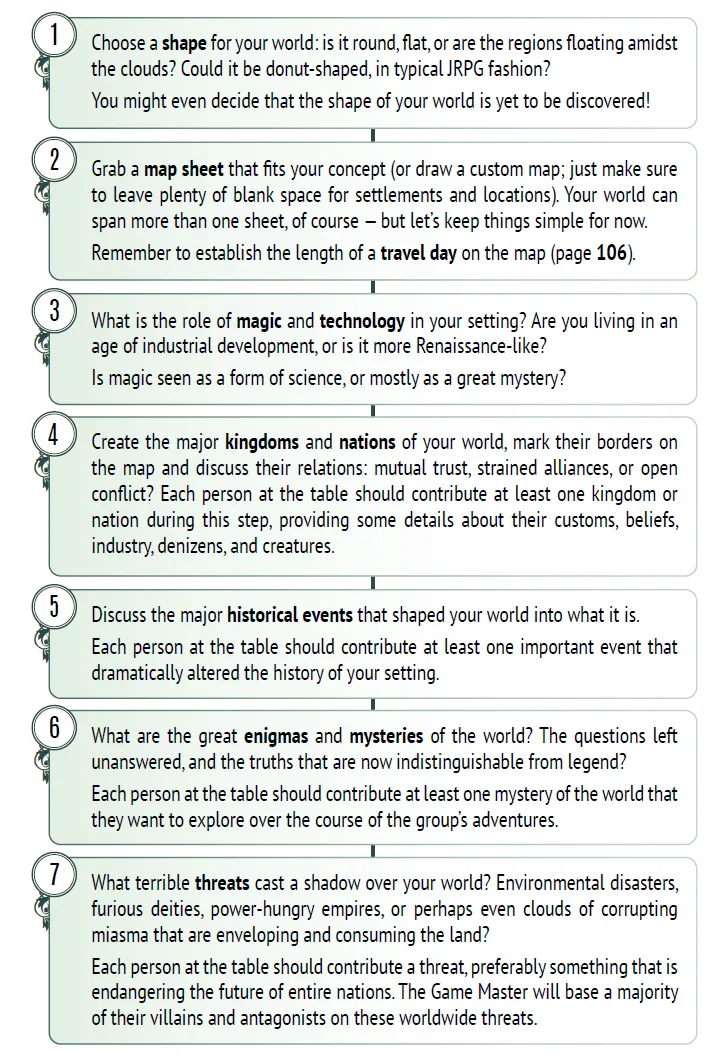
Sounds like a lot of work, but the GMs reading are probably thinking "yeah, that's basically just what I do to prep". Exactly! Prep is part of play that is usually locked off to the GM. TTRPGs are a creative act that lets the GM daydream about story beats, encounters, etc. throughout the day. I'm sure many of you have had that "aha!" moment while walking, in the shower, or doing some other mundane activity. This game asks you to share those moments with the rest of the group. When you create the world together, your players will be inherently invested in the outcome of the story because it's their story. My players have reached out numerous times with story and character ideas that they want to pitch to the group. I can truly say that this game has not been my story but ours.
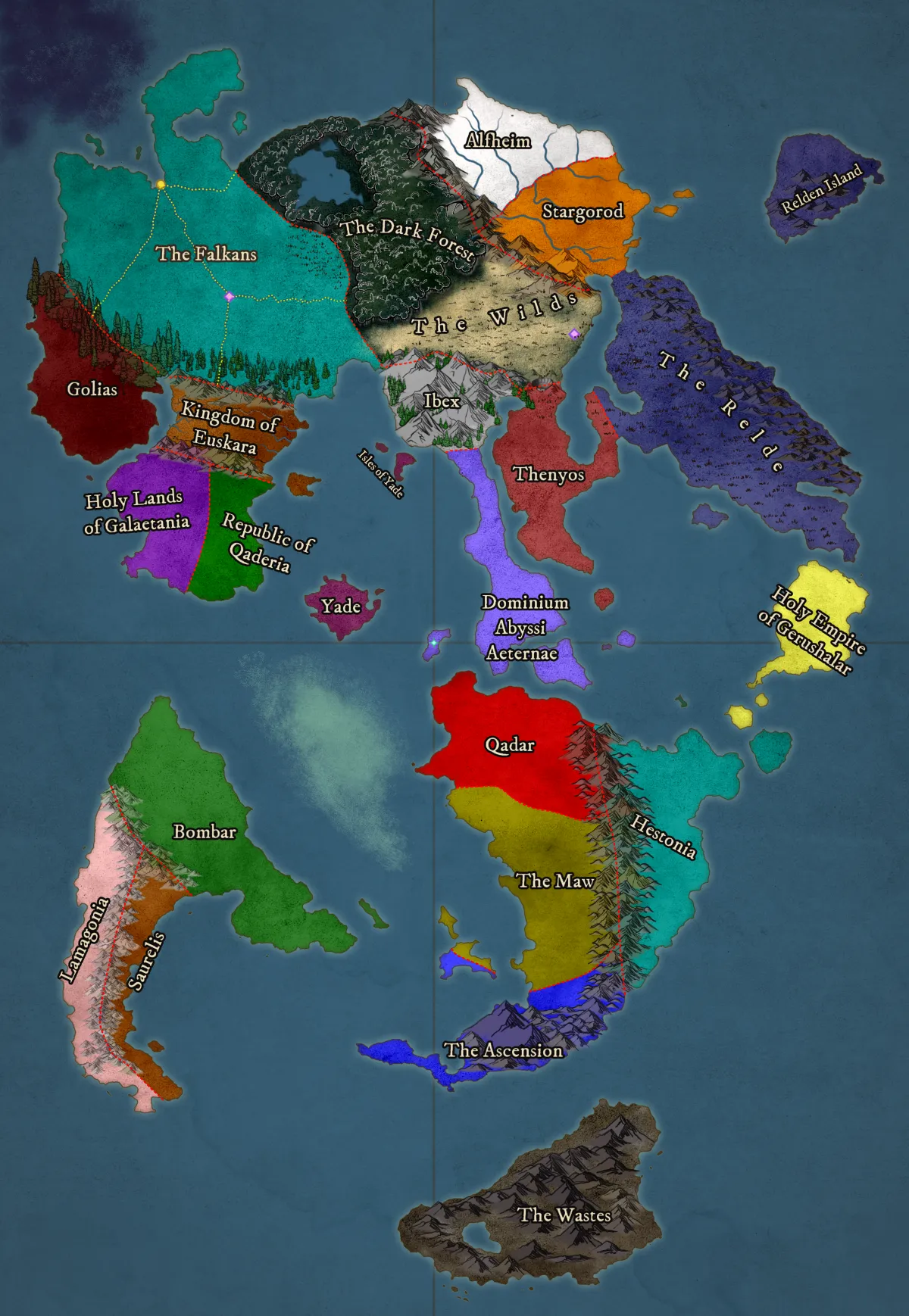
Now, FU recognizes that creating a world is a daunting premise and Ema quite cleverly created 8 pillars of world creation that act as guiding constants. This ensures that the world you create will match the tone and themes that the game is designed to explore. Creation is, in my opinion, much more interesting when placed under conditions and stipulations. The pillars act as prompts to spark your imagination. They involve things like ancient ruins, clashing communities, everything having a soul, and more. They're common staples of the JRPG genre but open enough to let you fit them into whatever type of world you dream up. Ema also provides a few example world maps to populate, which was easily our favourite part. One of my players used mapmaking software and created a more detailed map for us based on our loose sketches.
Creating a world, group, and characters is all well and good, but you still need a story to enjoy. That's where the genres come into play. There's High Fantasy, Natural Fantasy, and Techno Fantasy. Each genre has a separate atlas that breaks it down into more detail and is totally optional (though I find quite useful). Our group decided to go the Natural Fantasy route.
Why "genres"?
When I get the opportunity to play a TTRPG, I sometimes struggle to know just what kind of tone I should be striking as a player. This is easier when the game is set in a very specific genre. When playing CBR+PNK, I know that I should take actions that are ultimately reckless and end up in a bittersweet finale - like when I uploaded my character's consciousness to a rogue AI to help protect the street urchins I raised. That's cyberpunk, baby! It's a well-realized genre that brings a set of expectations for the kind of stories it tells.
This is the strength of genre. It creates a shared understanding of the type of story that we want to tell and helps players make roleplaying choices that feel in line with not only the world, but also the overarching story. Ema recognizes this and has set out three genres that work well within the rules framework he's created. We were most excited by the Natural Fantasy genre because it's so different from other games we've played.
The Corebook defines Natural Fantasy thusly:
"Tales of natural fantasy often revolve around warmth and community, harmony with nature and beasts, and the tragedy that befalls when the hearts of the people grow so dark that they twist and corrupt the very places they live in."
Each atlas takes the 8 pillars and adds or amends them based on the genre. For example, in High Fantasy clashing communities may be entire nations, while in Natural Fantasy it's more likely neighbours or perhaps even communities within a singular village. For our game, we decided to focus on one region of our map to tell a more local story in the Falkans and then zoomed in even more to the region of Nemetodurum.
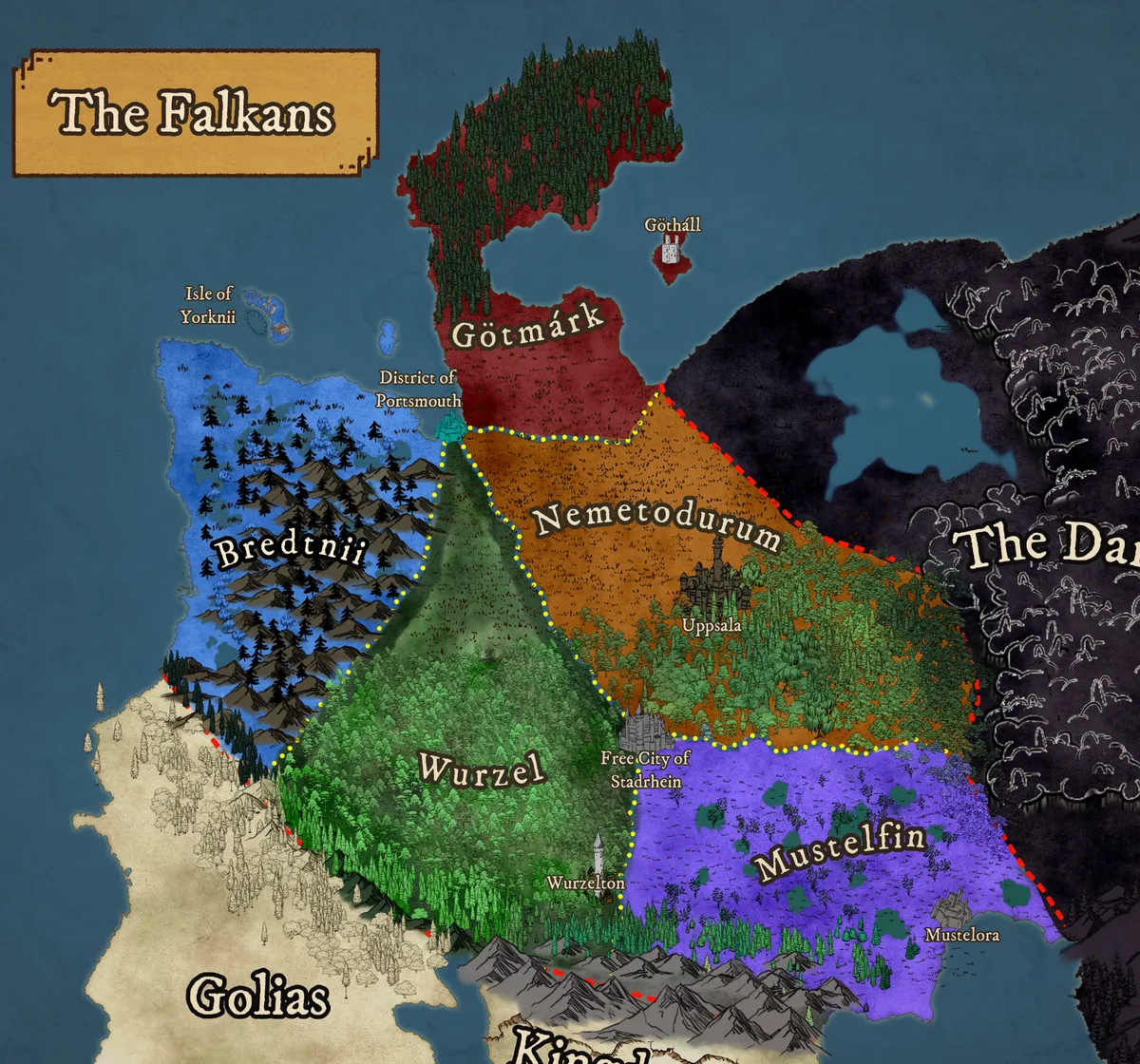
The story started to reveal itself to us as we dived into the themes of the genre:
GM: There's usually a mentor of some kind involved.
Player 1: Right, we should have a mentor.
Player 2: Ou! What if he has just died?
GM: Yeah, and the town is shaken up because he was chief councilor for the village.
Player 2: Yes!
Player 3: Maybe he's also one of the diplomats for Stadrhein.
Player 4: Nice, that connects us to the larger confederation.
GM: This is all great. What if one of you is older than the others too and was a former mentee of the now dead mentor? Intrigue!
Player 1: That sounds right up my alley.
Player 2: Yeah, and the rest of us are younger childhood friends.
And so on and so on. The creation of the world and prompting of the themes led to us naturally developing story threads.
And this is my hard sell for GMs: this has been one of the easiest games to prep that I have ever played. My players come up with all of the interesting plot ideas and then it's just a matter of charting out a few possible locations and events for a session. Even then, I'll ask them questions when we arrive at a location to get help fleshing it out together. The only potentially time intensive part was creating combat encounters, which has now been fixed thanks to the Bestiary. This game really tries to train you to let go. If you don't, you might struggle - but once you do, it's pure bliss.
The Problem: Combat
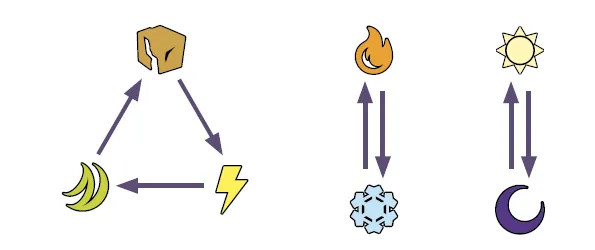
I've been dancing around one issue for a bit here now: combat. The combat system in this game is intricate, but wildly satisfying. It takes inspiration from numerous JRPGs and has an elemental weakness/resistance system that turns encounters into a bit of a puzzle:
A sheep looking creature appears with horns crackling with what looks like sparks. Hmm, an electric sheep? Well, electricity sure doesn't like being grounded, time to hit it with an earth spell! Would you look at that! You did extra damage! It must be vulnerable to earth.
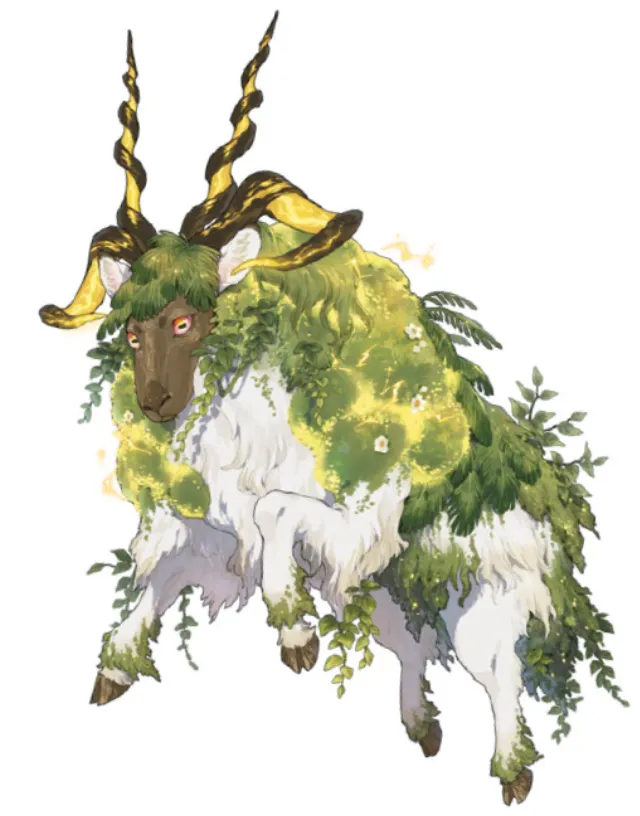
This system rewards players for paying attention and keeps things engaging. Combat is also designed to go no longer than about 3 or 4 rounds. Ema actually lays out quite beautifully the design principles for the combat in the introduction to the bestiary. He also admits, in the foreword, that the system was a bit complex for newcomers who weren't as versed in video game battle design. The Bestiary is meant to bridge that gap and offer even more tools to the GM.
The combat system itself is fascinating because it sits somewhat at odds with the improvised nature of the rest of the game. It's genuinely just not possible to improvise a monster on the fly. Take a look at this stat block from that lightning sheep from earlier:
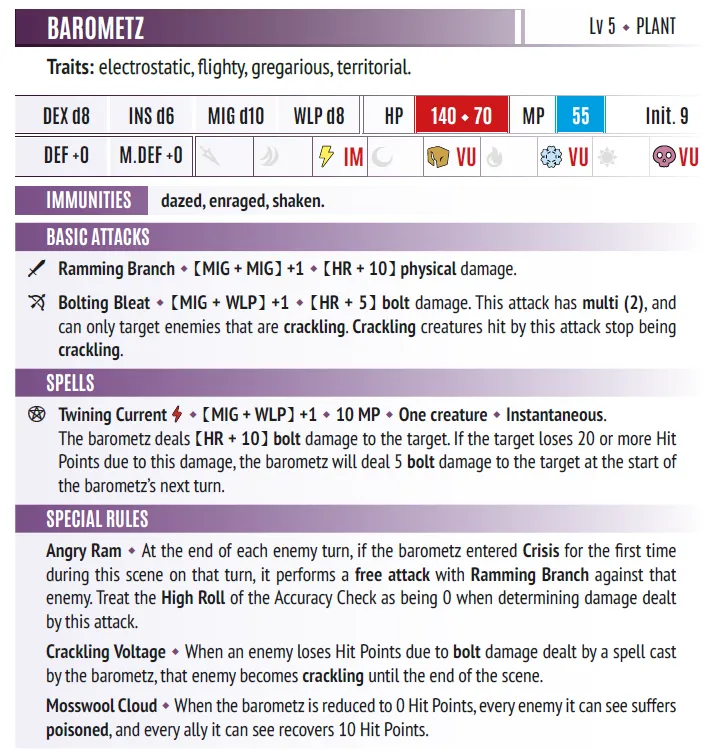
There's a lot going on here. Too much to make up something equivalent on the fly. Now, Ema doesn't actually expect you to do this. There are numerous classes and you get new abilities every level. You start at level 5 and cap at 50 and tend to level up every other session. Each time you level up, you get to pick a new skill which means your party becomes quite unique, quite quickly. The idea is that you would go off and create adversaries that mesh well with the skills and abilities of your players. It's a pretty tall ask for someone starting out with the system though. In fact, when my group first decided they wanted to play the system, I was genuinely pretty nervous about the combat aspect. That was, until I saw they had a Bestiary on the way.
The Solution: Bestiary
I'm overjoyed to report that Ema has definitely fixed the combat problem and radically shifted how I view bestiaries. Without pointing fingers, I've found that bestiaries sometimes assume the readers know exactly why they need the book.
This is a TTRPG, you gotta fight something! Here are some monsters to slay. Shoo.
For some games, this is totally fine, but FU is trying to do something a bit different.7 I promise we'll get to the Bestiary soon, but you need to understand how conflicts resolve to see why this Bestiary is so helpful. FU frames combat differently than many TTRPGs. In fact, it simply refers to conflict scenes and they can have combat but certainly don't need to. In many games with combat, there's an expectation that you're fighting to the death. Not so in FU.

No need to declare non-lethal blows here. You don't even necessarily need to reduce them to 0 HP. Remember, clocks are a perfectly valid form of conflict resolution as well. Got into a tussle that's a bit out of your league? Why not make a few clocks to take down the pillars of the room you're in while your friends cover you? The options are as boundless as your imagination.
This also translates to the Player Characters. If you're reduced to 0HP, you aren't necessarily dead. You must choose to either sacrifice or surrender. Sacrifice is exactly what it sounds like: you get to decide a suitably epic death for your character that makes a dramatic impact on the game (in collaboration with the GM and other players, of course). To sacrifice, though, you have to meet two of the three following conditions:
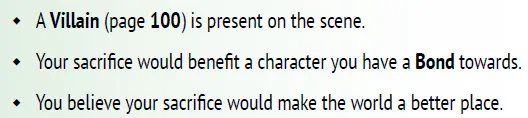
There's that disarming earnestness on display, guaranteeing that your sacrifice arrives at a suitable moment in the story. You are either in conflict with a villain, helping a friend, or improving the world.
Now, this may feel stifling to some. I can hear a subset of folk shouting: where are the stakes!8 That's where surrender comes in. You're given 2 Fabula Points9 (the narrative shifting meta-currency of the game) for choosing the option and then must suffer a consequence:
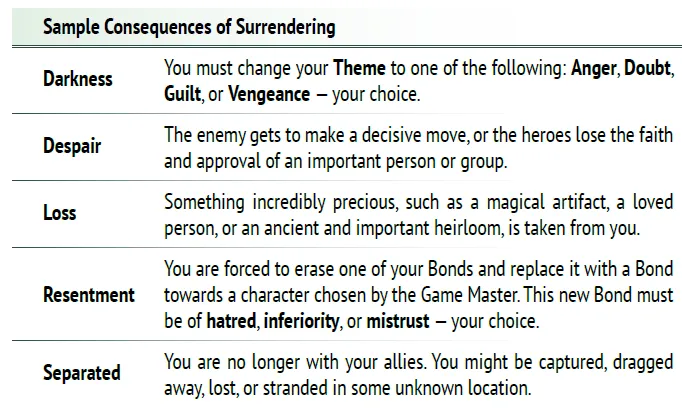
Now this is what I'm talking about! Death can be an overly simple and kind of boring consequence. Game over, bub. But the enemy getting to destroy your town? Your closest mentor turning on you? Losing the weapon you fought so hard to get? Now those are some spicy consequences, and the best part? The player chooses it. Your players will start to get excited to find out what bad stuff is going to happen because it leads to exciting, player driven play.
Maybe you're not convinced. Let me give you two examples from our campaign that help show the power of this system. The first is rather simple. Aegwin (a PC) is much older than the other PCs and considered a mentor character to them. Grendel (another PC), looks up to Aegwin as a hero of yore. While in a combat encounter, Grendel was struck down and decided to surrender. His player looked through the list and we figured Resentment fit well. It was an early fight, but Aegwin was the group's healer and he hadn't healed Grendel in time. Grendel's bond of admiration for Aegwin was replaced with mistrust which led to an incredible campfire scene where Grendel confronted Aegwin. It was a quiet but powerful character moment where Grendel started to realize that his hero might not be quite so heroic as he once envisioned and a painful moment of failure for Aegwin. All thanks to surrendering in battle!
The second illustrates something that I feel FU is uniquely suited for. I'm sure you've all experienced the difficulty of scheduling sessions. We can't always make it, but it feels bad to just throw a session out. I've taken to now running flashback episodes to fill out our characters backstories and expand our world. You never have to worry if a character will die accidentally. This process actually generated the main antagonist of our campaign and led to one of the most impactful sacrifices we could imagine. Another PC, Rolf, was brought into the game initially as an orphan. We thought, hey, why not play to find out what happened to his parents? In that session, his mother (played by Rolf's player), saved a group of revolutionaries from sure defeat and then was struck down by one of the antagonists after rolling a fumble. The dice had willed it into being! The player felt it was a perfect moment for a sacrifice. Rolf's father had to watch his wife die and we decided he would then become a Death Knight (a character from the Bestiary). We had assumed both his parents were dead before this, but oh how wrong we were! Our ideas are always less interesting than what actually happens at the table.
A Tool, not a Cage
That choice to turn the father into a Death Knight is exactly why this Bestiary is so useful. It offers inspiration for your campaigns and profiles that you can then quickly put together to create memorable fights. Each entry offers suggestions instead of concrete answers as to the nature of the adversaries. Let's look over the Death Knight entry to better see what I mean.
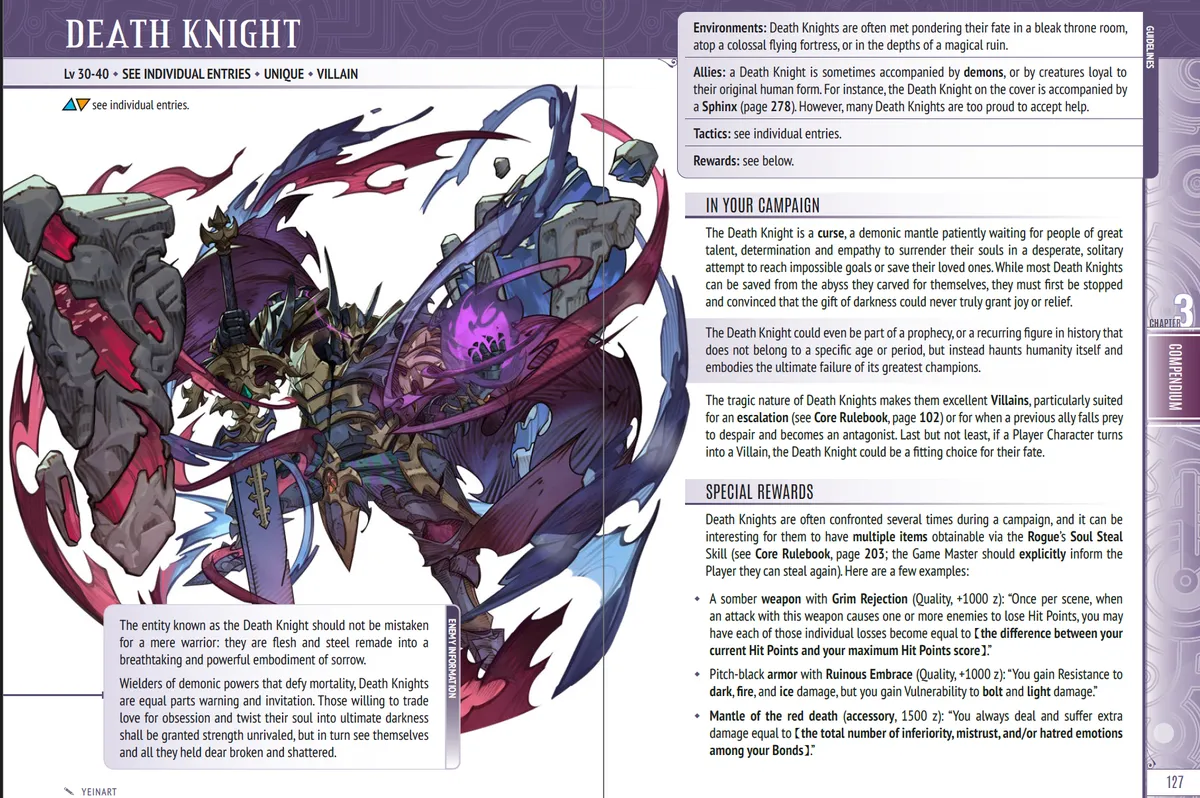
The information is all playable information. Things that will actually help you run the game. It gives you ideas for the environment, who they might fight alongside, and details tactics (more on that in a moment). My favourite element is the "In your Campaign" section. You're given suggestions for how to utilize the NPCs effectively and this was the reason I suggested the Death Knight in that flashback session. It's a reminder that these are meant to be characters in your game and not just fodder to smack around. Plus, the rewards section is just legitimately useful for coming up with cool items that fit what your players want.
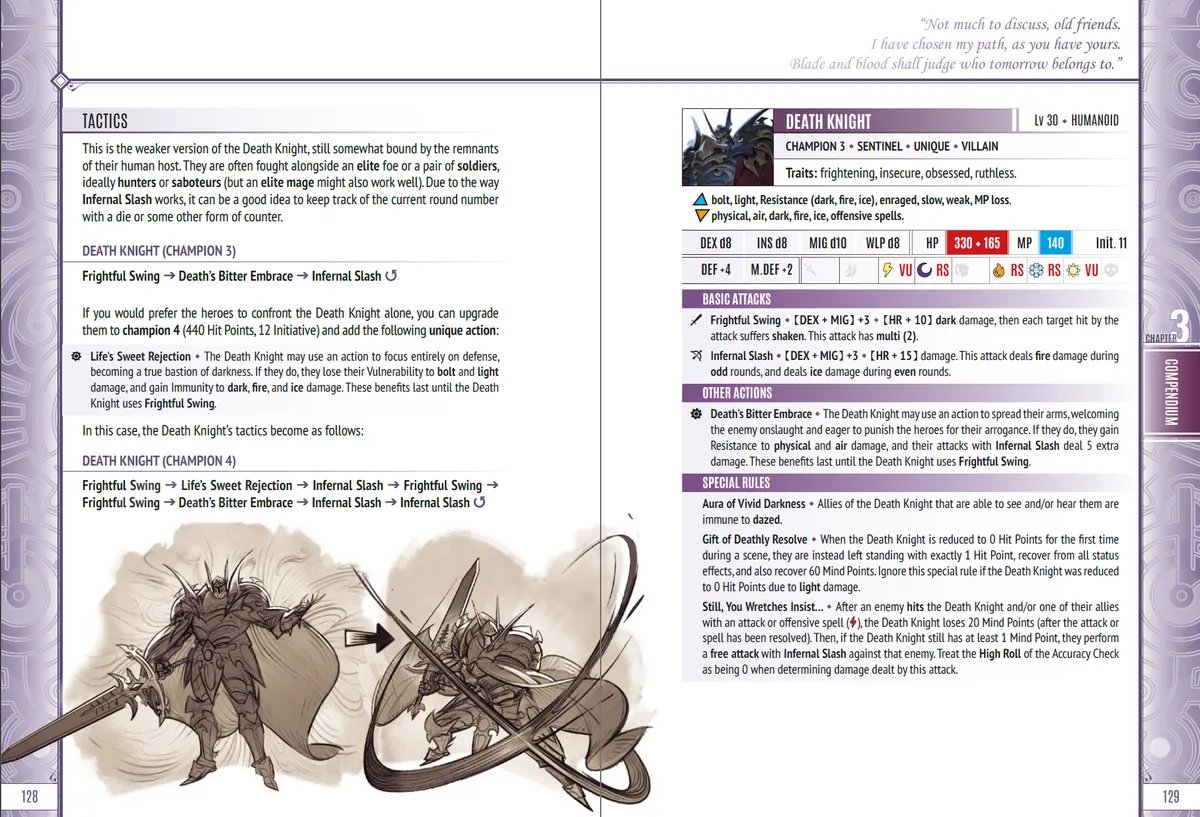
The Tactics section is something I hope to see more games implement. Dragonbane has something kind of similar (roll tables), but these tactics remove a lot of the guesswork for the GM and allow the players to start to figure out the routines of their enemies. It's another part of the puzzle of combat. It's true that the special rules can be a bit hard to remember at times, but it's all on one compact page which makes it quite easy to reference during play.
Plus, notice the customization elements here. Want him to fight by himself? Here are some upgrade options. The beginning of the compendium has an entire section on how to upgrade or downgrade adversaries as well. No element of this system is kept in the dark from the GM. It's the first game where I feel like it has taught me it's principles and showed me how to design for it. It does what every great teacher does: it teaches you how to no longer need it's help.
The Bestiary has taught me that very lesson. I relied quite a bit on it as I got started but slowly found myself creating my own adversaries. This is helped along by the new incredible Quick Assembly procedure.
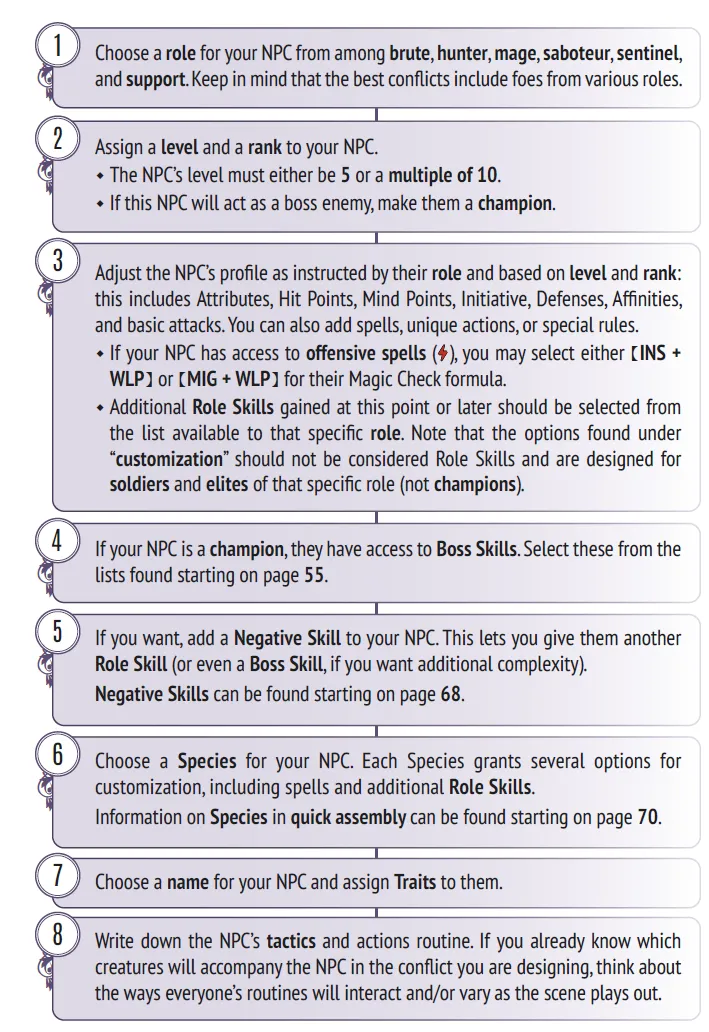
I can't stress the sheer amount of choice and variety that goes into this assembly guide. You'll just need to check it out for yourself, but you can create some incredibly specific and exciting adversaries that will be perfectly scaled (or not if that's your jam) to your party. And here's the thing: it's super fun! As the GM, you get to basically do your own character creation. There are 6 types of NPC roles that serve specific functions in battle and each section has a write up about the archetype followed by NPC creation options. I felt like I actually learned something about JRPG game design and started to notice these elements when playing games like Bravely Default and Octopath Traveler 0.
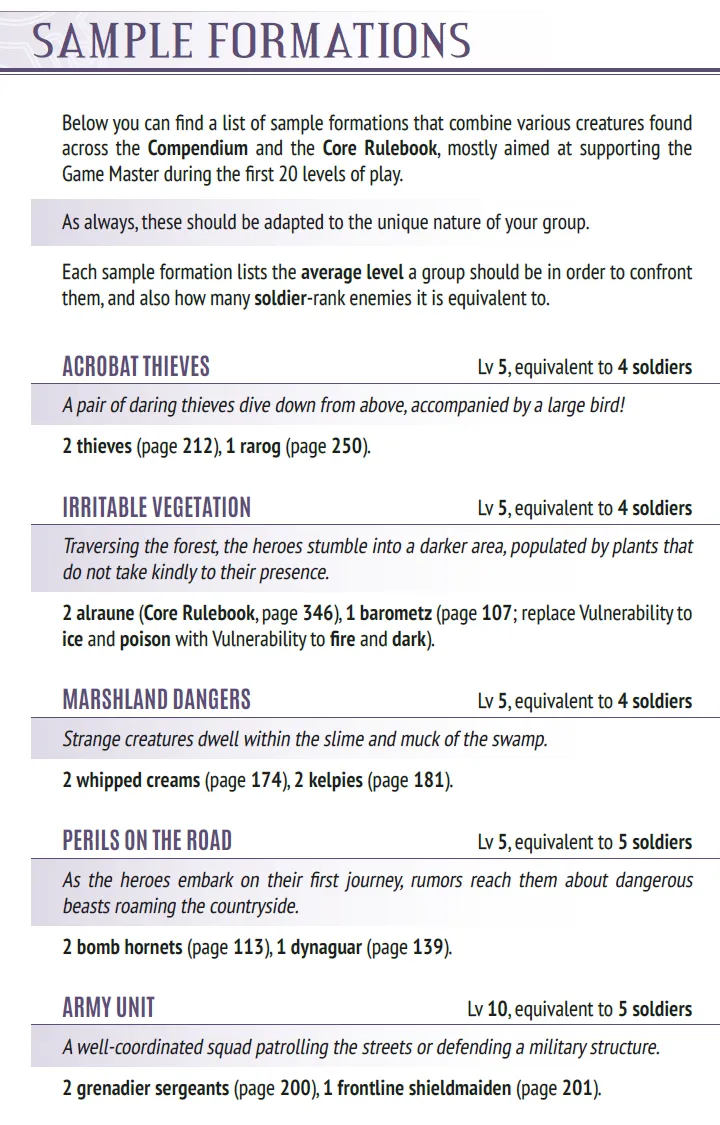
I hope you're starting to see just how usable this book is. Every facet of it is designed to make your life easier and to better enjoy the game. Hell, it even gives you sample formations in the appendix to help you get a handle on encounter creation:
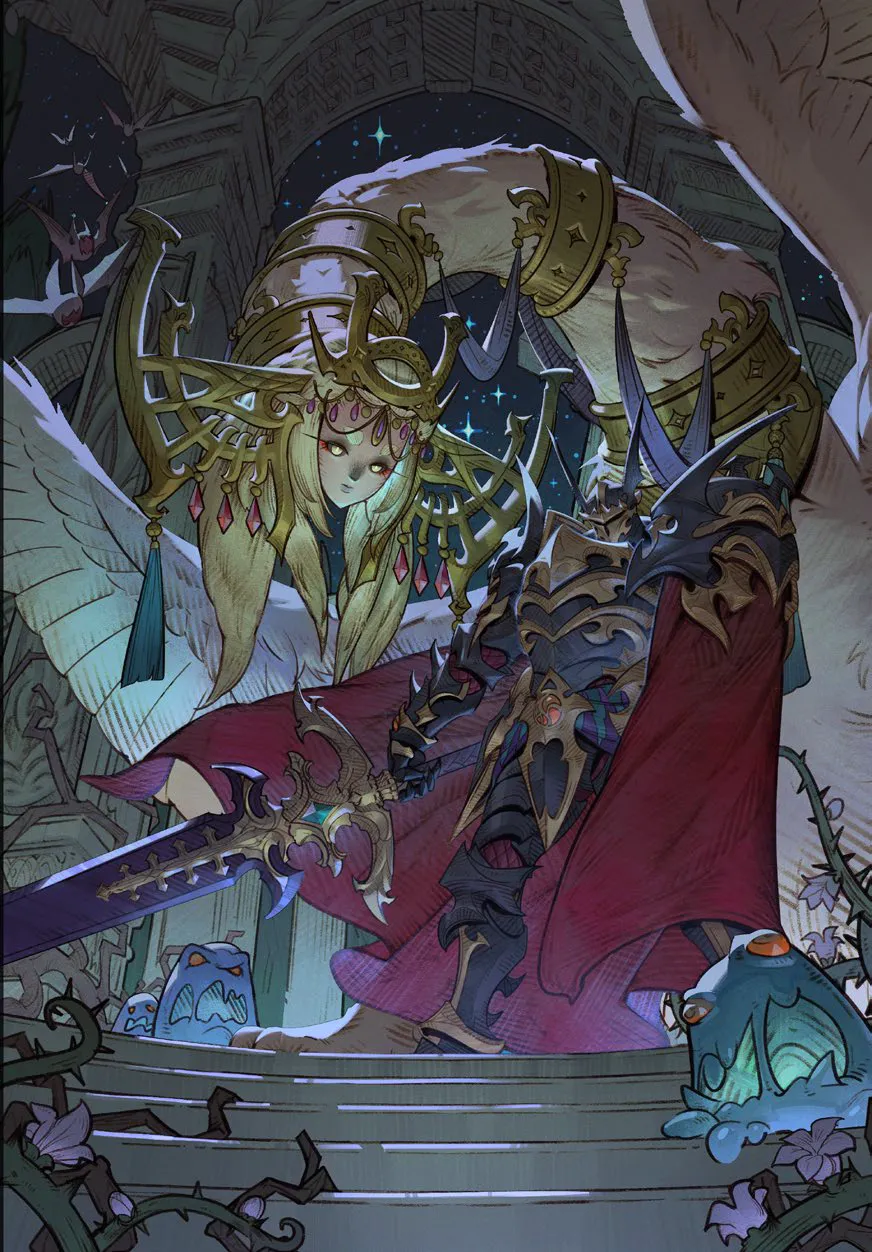
It's very clear that Ema paid attention to what was missing from the game and this book fills in any gaps that were missing from the corebook. Plus, the art is just astonishing. I mean, look at that cover by yeinARt:
So, how did this change your play culture exactly?
Before we played FU, I ran our group through a Delta Green campaign of God's Teeth.10 We all love DG, but it's an investigation focused game. Improv still happens, but there's an understanding that there's an intricate story to uncover. The relationship the players and I generated from that was a more traditional one: I had the answers and they needed to probe to figure them out. This works very well for DG, but it's also a big ask of the GM and makes running improvised scenarios incredibly difficult. It's also the right style of play for the genre that DG explores. As we've discussed, genre has different form requirements and so that style of play just doesn't work well for FU.
Starting our campaign, we were struck by just how much fun it is to create everything together. We didn't rush the process either. We spent about two and half sessions (10 hours total) building our world and creating our characters. That might sounds like we did prep for three sessions before actually getting to play, but that's not quite accurate. Those sessions were play. It's hard to put into words the sheer excitement that creative collaboration can inspire. Suggesting an idea and then having a friend add on to it in a way you never would have thought of but is so perfect is intoxicating.
As we eventually began playing out our campaign, I noticed my players got more and more comfortable suggesting story beats. And here's the thing, they weren't goofy. By making the world together, it got them to buy into the fiction in a way that was just a bit harder before. The story suggestions were what they felt best served the story, not themselves. They knew it would serve the story because they knew the world. When you as GM keep the world guarded for them to pick apart, it's difficult for a player to know what's the best roleplaying decision to make. What if you're screwing up their plans? When you're collaboratively storytelling together, you can't screw up any plans!
This collaborative ethos has bled into our other games, too. The other GM in the group is starting up a campaign of Sentinels for us and he decided to have us help craft the world with him. It's already made that campaign more enticing for me. In general, our group has become more open to loosening our games and letting the story unfold in play.
We're also less concerned about where the story is going ultimately. We know that we'll figure it out. After all, no one really knows what happens next in life. Isn't that thrilling?
The why and how of Japan's influence on Italy is beyond the scope of this review, but Weird Place did an excellent video on the subject if that tickles your fancy!↩
Valeria Loves has an excellent review of the system that explains it in a bit more depth. I think it's a great companion read as her experience was fairly different from mine.↩
I get most of you were likely raised on Rock the Dragon, but the Canadian theme is just perfection. DRAGON DRAGON BALL, DRAGON BALL ZEEEEE!↩
They say there's always signs of queerness in childhood and well...pretty girls and pretty boys! This had me about as confused as Phoebus and Esmerelda in Hunchback.↩
Break!! and Twilight Sword take this more traditional approach by creating their own (heavily inspired) settings. There's nothing wrong with this, but I suspect your mileage may vary on how much you enjoy settings that feel kinda like games and shows you enjoy but with the serial numbers filed off.↩
Check out this video if you want an in depth explainer on how to play.↩
I am resisting the urge to spend a chunk of time talking about the oddities of creating a list of sentient creatures to beat the shit out of, but this footnote will have to do.↩
I have a lot of thoughts on the idea of death being what gives a game stakes, but I'll save that for another time.↩
Fabula Points take some time to get used to. They're a meta-currency that lets the players invoke rerolls and change the narrative. It actually takes a bit of time to get used to the idea, but once you do, players start to see opportunities to spend them. They work particularly well as a way to let characters do something that makes sense within the fiction but without the risk of RNG. Plus, the more you spend, the more XP you get at the end of a session. Again, give it time because the system is trying to change the way you play which is not a natural, or simple, process.↩
Talk about a hell of a tonal shift. If you know what that campaign is about, you get it.↩